



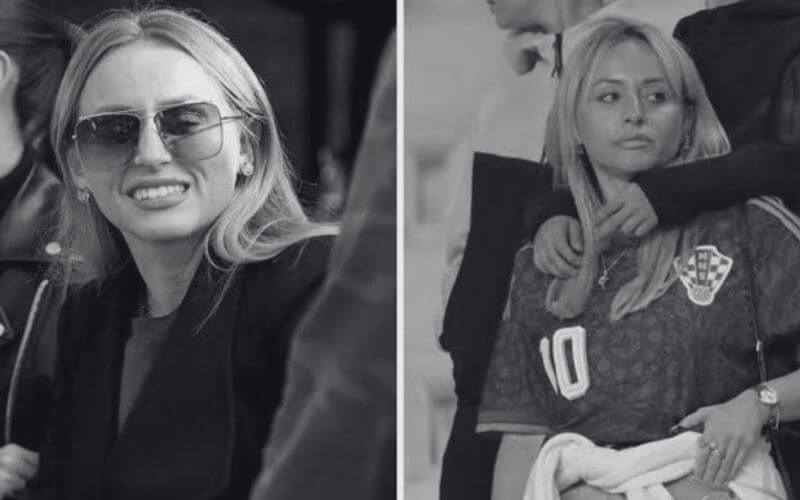

When a footballer reaches the level of Luka Modrić — six Champions League titles, a World Cup Golden Ball, and 13 seasons at Real Madrid — public curiosity naturally extends to the people closest to him. That includes his family. One name that occasionally surfaces in family searches is Diora Modrić. So who is she, and what do we actually know about her?
This article covers what is confirmed, what remains unknown, and the family background that shaped the Modrić household. It also explains why information about Diora specifically is so limited compared to what is documented about her famous brother.
Who Diora Modrić Is
Diora Modrić is identified as a sister of Croatian footballer Luka Modrić. That is the clearest confirmed detail available. A biographical record on MyHeritage lists Luka Modrić as Diora’s brother, with Luka’s birth date noted as September 9, 1985.
Beyond that relationship, Diora is a private individual. She does not appear to have a documented professional career, a public media profile, or verified social media accounts that have attracted mainstream press coverage. She has not been the subject of interviews, features, or official profiles in football or entertainment media.
This is worth stating clearly upfront: most publicly available information about the Modrić family centers on Luka, not Diora. Her age, occupation, marital status, and other personal details are not independently verified by any reliable source. Any article claiming to know those details with confidence should be read carefully.
Some secondary football-family websites also name a woman called Jasmina alongside Diora as Luka’s sisters, but these are not primary sources. Diora and Jasmina are two different people, and readers searching genealogy records or family-profile pages should be careful not to confuse them.
The Modrić Family and Where They Come From
To understand the Modrić family’s background, it helps to look at what is documented about Luka’s upbringing. The family’s roots are in the Zadar region of Croatia. Luka was born in Zadar on September 9, 1985, according to Encyclopaedia Britannica.
The family lived through one of the most difficult periods in modern Croatian history. During the Croatian War of Independence in the early 1990s, the Modrić family was displaced from their home. Luka’s grandfather was killed during the conflict, and the family spent time living as refugees in hotels under very hard conditions.
That kind of background shapes a family in lasting ways. It is part of why Luka’s story is often described as one of resilience. He grew up without stability, without easy access to football facilities, and still became one of the best players in the world.
It would not be accurate to assign specific wartime experiences to Diora personally. No primary source confirms what she went through during that period or how directly those events affected her. What can be said is that these experiences were part of the wider Modrić family story.
Luka Modrić — Why His Family Draws Public Attention
It is worth pausing to explain why people search for Diora at all. The answer is straightforward: her brother is one of the most decorated footballers of his generation.
Luka Modrić is widely regarded as one of the greatest midfielders to have played the game. He captained Croatia to the 2018 FIFA World Cup final, a remarkable achievement for a relatively small nation. At that tournament, he won the Golden Ball — the award given to the best player of the competition.
His club career tells a similar story. Real Madrid’s official club profile documents that Luka joined the club in 2012 and spent 13 seasons there. During that time he made 597 appearances, scored 43 goals, and won 28 trophies. That includes six Champions League titles, which puts him among the most successful players in the competition’s history.
Before Madrid, his path ran through Croatian football. He played for Zrinjski Mostar, Inter Zaprešić, and Dinamo Zagreb before moving to Tottenham Hotspur in England. It was from Tottenham that Real Madrid signed him in 2012.
Globally recognized athletes bring attention to the people around them, even when those people have not sought it. Siblings, parents, and extended family members of major sports figures often become subjects of public curiosity simply because of the connection. That is the most straightforward explanation for why Diora’s name appears in searches.
Luka’s Immediate Family — Keeping Diora in Context
One thing worth clarifying is where Diora fits within the wider Modrić family picture. She is Luka’s sister — a sibling, not a spouse or child. This distinction matters because readers sometimes arrive at family searches from different angles, and it is easy to mix up different members of a footballer’s family.
Luka’s wife is Vanja Bosnić. The couple have three children: Ivano, Ema, and Sofia. That is Luka’s immediate household. Diora belongs to a different branch of his family story — his siblings, who grew up with him rather than the family he started as an adult.
As mentioned earlier, Jasmina Modrić is another name that appears in secondary coverage of Luka’s family. Diora and Jasmina are separate individuals and should not be treated as the same person. Beyond that, the sibling order — who is older, who is younger — is not confirmed by any reliable primary source, so it would not be accurate to state it here.
Why There Is So Little Information About Diora
The limited public information about Diora is not unusual. Many relatives of globally famous athletes simply choose to stay out of the spotlight. That is a reasonable and common choice, especially when the attention is directed at a sibling rather than yourself.
The absence of a documented career or media presence does not indicate anything secretive or unusual. It most likely reflects a straightforward preference for privacy. Diora has not given interviews, does not appear to maintain a public profile, and has not been reported on by credible sports or entertainment outlets in any meaningful way.
Readers who want reliable background on celebrities and the people connected to them should look for sources that are transparent about what is confirmed and what is not. Sites that invent personal details or present family-blog claims as facts are not a good guide. For broader context on public figures and the people around them, resources like Startbusinessview aim to keep that line clear.
What We Can Say With Confidence
To bring it together simply, here is what is confirmed about Diora Modrić:
- She is identified as Luka Modrić’s sister in genealogical records.
- She is a private individual with no documented public career or media presence.
- She comes from the same Zadar-region family background as Luka, which includes the hardships of the Croatian War of Independence in the 1990s.
- She should not be confused with Jasmina Modrić or with Luka’s wife, Vanja Bosnić.
Everything else — her age, her work, her personal life — remains unverified. Any source that confidently fills in those blanks without citing a reliable primary reference is most likely speculating.
Final Thoughts
Diora Modrić is connected to one of the most celebrated footballers of the modern era. That connection is why her name draws searches. But she herself is a private person, and the honest answer to most questions about her is that confirmed public information is simply limited.
That is not a gap to be filled with guesswork. It is a reflection of the fact that not everyone connected to a famous person seeks or welcomes public attention. The Modrić family story — shaped by hardship, displacement, and remarkable sporting achievement — belongs primarily to Luka’s documented journey. Diora’s place in that story is real, but it is hers to share if and when she chooses to.
Also Read: