


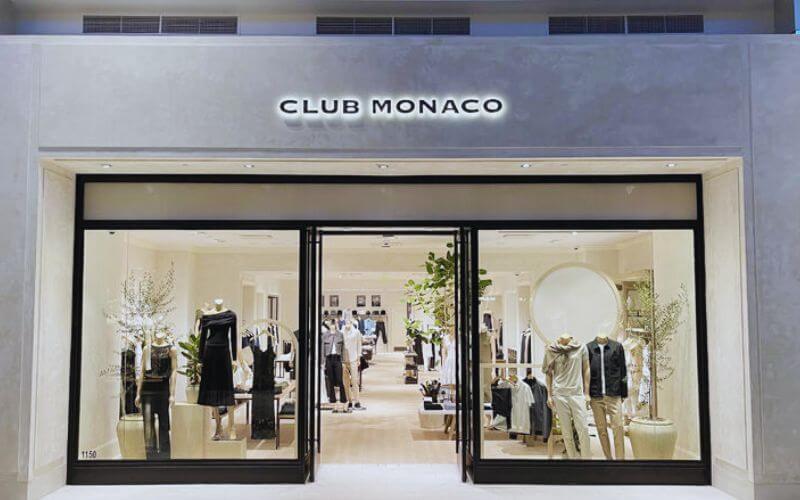

In late 2025, Club Monaco closed its original Queen Street West store in Toronto — a location that had been open for roughly 40 years. That kind of closure gets people talking. It also gets people searching: Is Club Monaco done? Is the brand going bankrupt? Should loyal customers start saying their goodbyes?
The short answer is no — at least not yet, and not in the way most people assume. But the longer answer is more useful. Here’s a clear breakdown of what’s actually happening with Club Monaco, who owns it now, and what recent closures really signal.
Club Monaco Has Not Filed for Bankruptcy
Let’s start with the most important point. As of the research available, Club Monaco has not filed for bankruptcy. No confirmed filing exists. The brand is still operating with a reduced store network across Canada and the United States.
The online store also remains active. That matters because brands that are truly shutting down typically stop taking orders and go dark online. Club Monaco has not done that.
It’s also worth separating two things that often get confused: store closures and full business failure. They are not the same thing. A company can close 10 stores and still be a functioning business. Closures are a cost decision. Bankruptcy is a legal and financial one. Club Monaco is dealing with the first, not the second — at least based on what’s been reported so far.
What Actually Closed and When
The closure that got the most attention was the original Club Monaco location at 403 Queen Street West in Toronto, which shut down in late 2025. The store had been open for about 40 years, making it a symbolic address for the brand. Losing it felt significant — and it was.
Around the same period, additional Toronto locations also closed. The North Yonge store shut down amid reports of unpaid rent, which suggests financial strain at the store level. Other locations in Toronto followed in late 2025 and into early 2026.
In the United States, Club Monaco’s store footprint had already become very small. Further closures at the end of 2025 and into early 2026 reduced it even more. In Canada, locations in Vancouver, Calgary, Ottawa, and Montreal were still open as of early 2026 — though some of those closed shortly after.
One important note: store counts shifted quickly during this period. Any specific number risks being out of date within weeks. What matters more is the trend — a deliberate reduction in physical presence, not a sudden total shutdown.
Who Owns Club Monaco Now
Many people still associate Club Monaco with Ralph Lauren, since the company owned it for years. But Ralph Lauren sold Club Monaco to Regent, L.P. in 2015. That’s a decade ago now.
Regent is a private equity firm. That distinction matters. Private equity firms are not retail operators with deep loyalty to a brand’s heritage. They are investment vehicles focused on returns. When a location underperforms, the decision to close it tends to come faster and with less public explanation than it would from a founder-led business or a large public retailer.
This ownership context explains a lot about how Club Monaco has been managed in recent years. Cost controls tend to be tighter. Underperforming stores get cut. The focus shifts toward what generates margin, not what preserves brand legacy. That doesn’t make it wrong — it’s just how private equity operates.
Store Closures as a Business Strategy, Not Just a Warning Sign
Here’s something worth understanding if you follow retail at all: closing stores is often a rational business decision, not a sign of collapse.
Every physical store carries fixed costs — rent, staff, utilities, insurance. If a store doesn’t generate enough revenue to justify those costs, it drags down the whole operation. Closing it frees up cash and can actually improve the company’s overall margins.
Street-front flagships like the Queen Street West location are especially expensive. High rent, heavy foot traffic dependence, and visibility costs make them tough to justify unless sales are consistently strong. Mall or premium shopping center locations often have different rent structures and more predictable customer flow. Brands tend to exit the more expensive, lower-performing site first.
Think of it this way: cutting weak store locations is like removing dead weight. It doesn’t mean the company is dying — it may mean the company is trying to survive by making smarter cost decisions. The goal is to keep the profitable parts running and eliminate the ones bleeding money.
Club Monaco appears to be in what’s often called a rightsizing phase. It’s reducing its physical footprint while keeping its digital store running and maintaining select retail locations that still make sense financially. Other retailers have done exactly this — shrunk their store count, invested in e-commerce, and continued operating successfully with a smaller but more efficient presence.
This Pattern Is Not New for Club Monaco
The current wave of closures isn’t the first time Club Monaco has gone through a period of restructuring. The brand has seen multiple rounds of store reductions and strategic changes over the years. This context matters because it means the current situation isn’t a sudden, unprecedented crisis — it fits a longer history of adjustment.
The brand has also been repositioning its product assortment and pricing in recent years, according to reporting from WWD. That kind of internal shift often comes with external changes too — fewer stores, different locations, updated product mix. It’s a sign the brand is trying to find a more sustainable model, not necessarily that it’s winding down.
For entrepreneurs and managers watching this story, the Club Monaco situation is a useful case study. A brand with real equity — 40-year-old stores, loyal customers, strong aesthetic — can still struggle when fixed costs outpace revenue. Ownership structure shapes how fast those problems get addressed. And a reduced physical footprint doesn’t always mean the end of the business.
If you’re interested in how retail brands navigate these kinds of transitions, StartBusinessView covers business strategy, ownership shifts, and industry trends with the same practical focus.
Can You Still Shop Club Monaco?
Yes. The Club Monaco online store has remained active through the closures. If your local store has closed, the website is still an option. That’s a meaningful data point — brands in true shutdown mode don’t maintain operational e-commerce. They liquidate inventory and close the digital doors too.
For anyone near a remaining Canadian city with a Club Monaco presence, some physical locations were still open as of early 2026. But given how quickly the store count has changed, it’s worth checking directly before making a trip.
The Bottom Line
Club Monaco is not confirmed to be going out of business. It has not filed for bankruptcy. What it has done is close a significant number of stores — including its original Toronto flagship — as part of what looks like a deliberate effort to cut costs and reduce a store network that had become too large or too expensive to sustain.
The brand is owned by a private equity firm that moves quickly on underperforming assets. The physical footprint has shrunk considerably in both Canada and the U.S. But the online store is still running, and some retail locations remain open.
Whether Club Monaco stabilizes, gets sold again, or eventually winds down depends on decisions that haven’t been made public yet. What’s clear right now is that a store closing near you doesn’t mean the brand is finished — it means that specific location didn’t make financial sense anymore. Those are two very different things.
Read Also: